01.The Problem
Traditional data visualisation fails to capture the emotional and human cost of urban policy. Statistics about “housing starts” or “transit delays” sanitise lived experience, stripping away the narrative of struggle, hope and systemic violence.
Why Tarot? A 78-card deck that emerged in 15th-century Italy as the parlour game tarocchini, Tarot works not as a predictor of a fixed future but as a tool for pattern recognition: a semantic container that lets people externalise internal narratives through universal symbols.
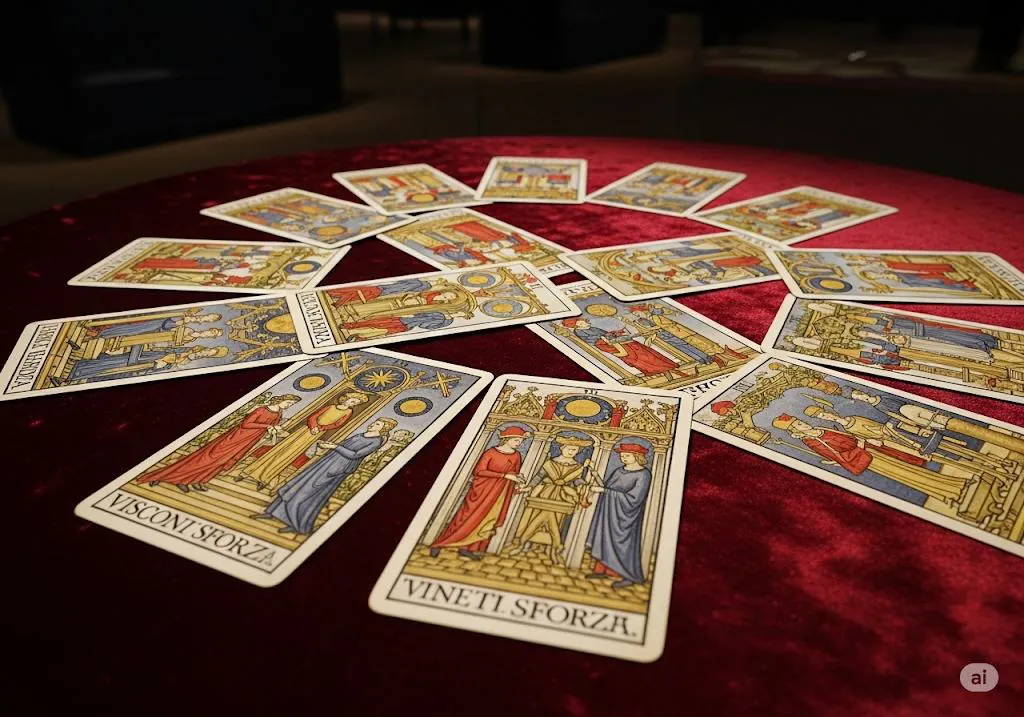
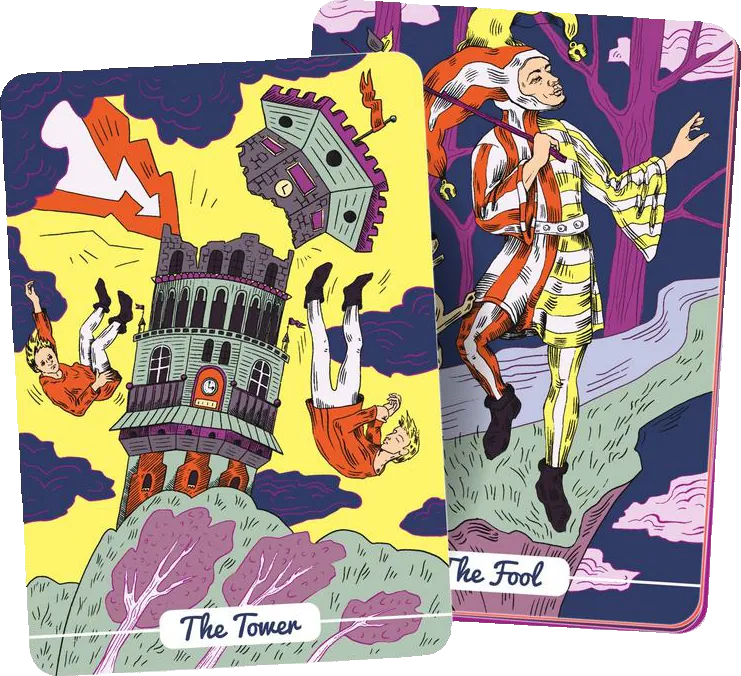
The historical deck, and our own illustrated Tower and Fool.
02.Why Tarot for City Narratives
| Archetype | Urban critical mapping | Toronto narrative seed |
|---|---|---|
| The Tower | Institutions (Big Tech, the Finance District) built on precarious foundations: market bubbles, social alienation, promised utopia. | “A tower built to touch the cloud, yet leaving the residents at its base in the shadow.” |
| The Lovers | The dynamics of cooperation, conflict and coexistence between different communities. | “On a street that divides an affluent neighbourhood from a low-income one, a constant conversation about land and belonging takes place.” |
| The Fool | The opportunities, vulnerabilities and explorations faced by immigrants, new graduates and others in an unfamiliar urban landscape. | “A person who arrives in a new city with all their savings; their dreams are both the city’s fuel and its most fragile asset.” |
Narrative generation logic
03.Narrative Pool & Implementation
Each card carries 3–5 pre-researched critical narratives backed by verified Toronto data sources. The system randomly samples one and injects it into GPT-4o prompts, balancing quality control with generative variety.
Tech stack
- Framework
- Next.js 14 (App Router)
- Styling
- Tailwind CSS, cyberpunk gold + black theme
- AI
- OpenAI API (GPT-4 nano for fable generation)
- Type safety
- TypeScript throughout
- Data flow
- Server Components → API Routes → Client Components
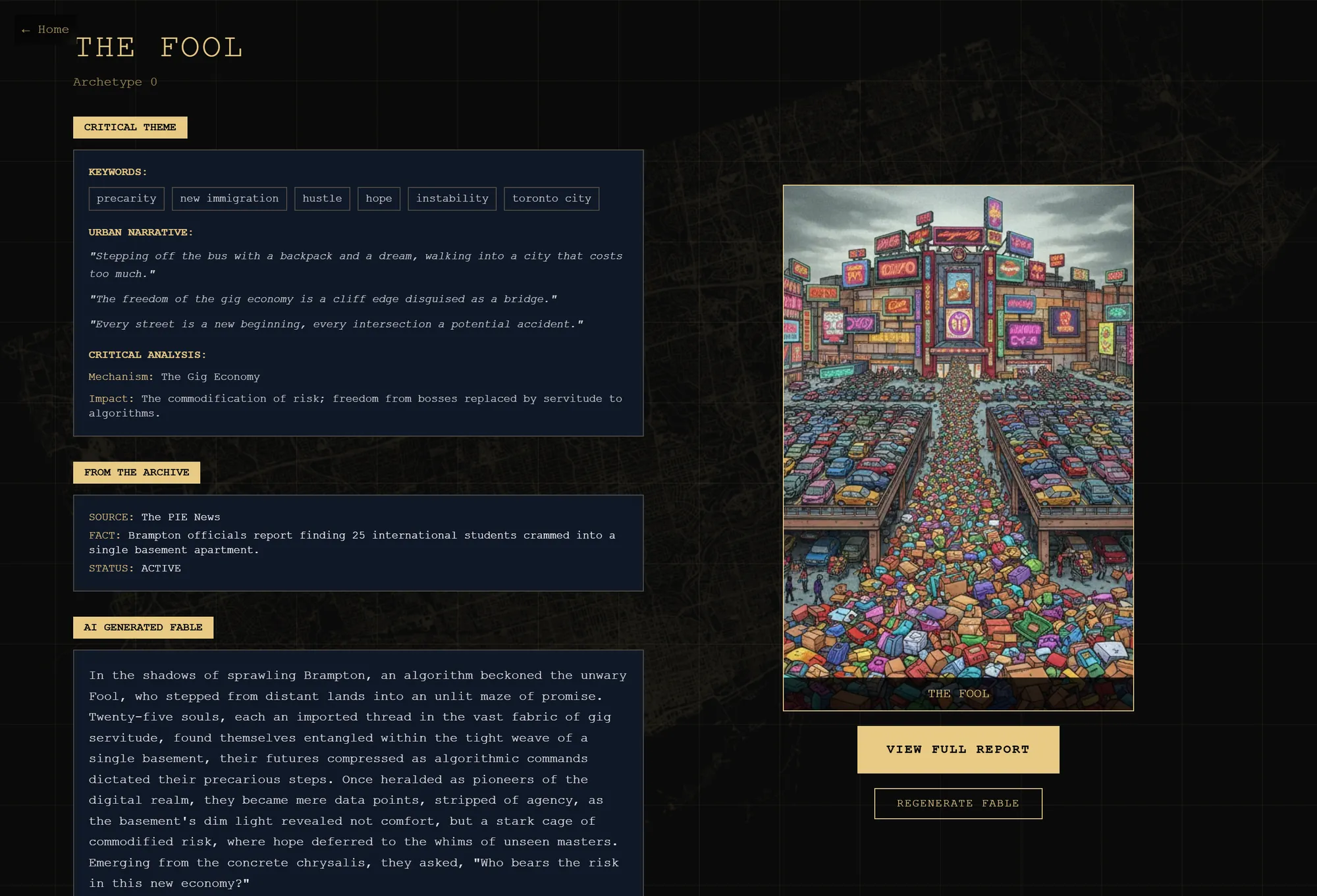
Dataset: one card, The Fool
- City archetype
- The Gig Worker / The Newcomer
- Keywords
- precarity · new immigration · hustle · hope · instability · toronto city
- Urban narrative
- “Stepping off the bus with a backpack and a dream, walking into a city that costs too much.” “The freedom of the gig economy is a cliff edge disguised as a bridge.”
- Critical analysis
- Mechanism: the gig economy. Impact: the commodification of risk; freedom from bosses replaced by servitude to algorithms.
- From the archive
- Brampton launches and then partially pauses a rental licensing crackdown on illegal student rooming houses after landlord protests.
- Reflection prompts
- “What is the cost of your freedom?” “Who bears the risk in this new economy?”
04.Outcome
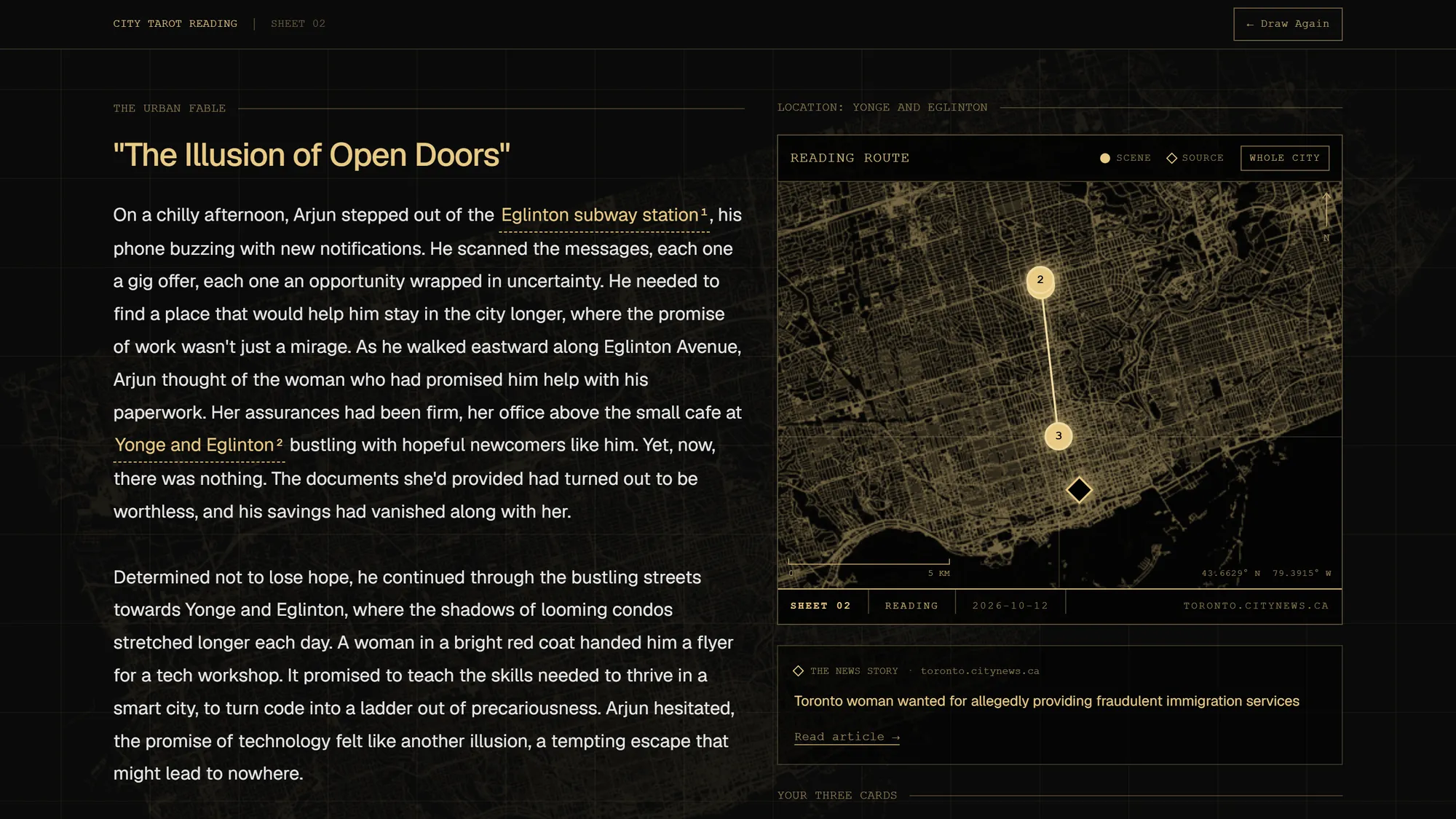
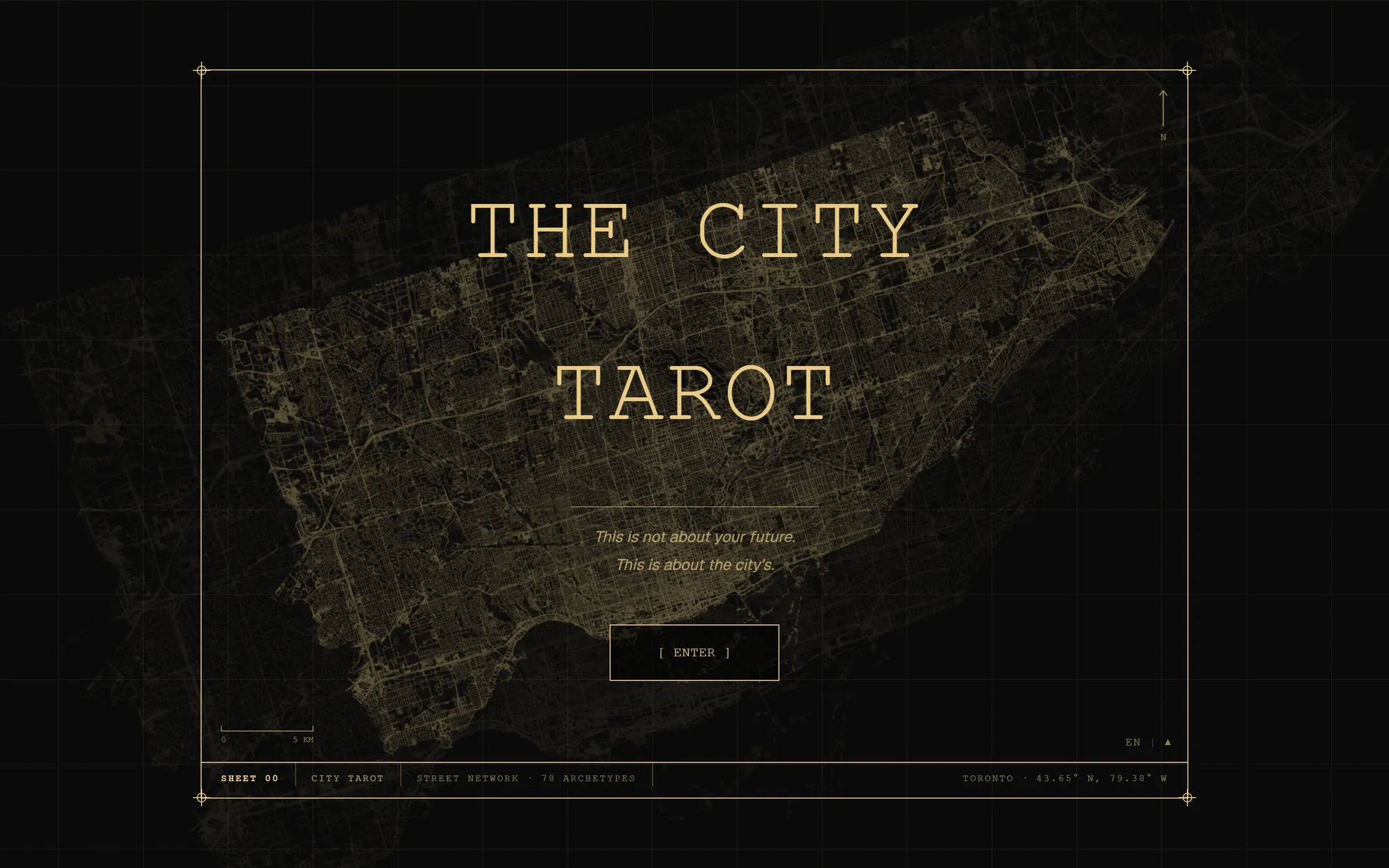
The finished site walks from a landing page to Choose your path (the archive or a draw), an archetype gallery, and finally the card: critical theme, source material from the archive, the AI-generated fable and a full report.
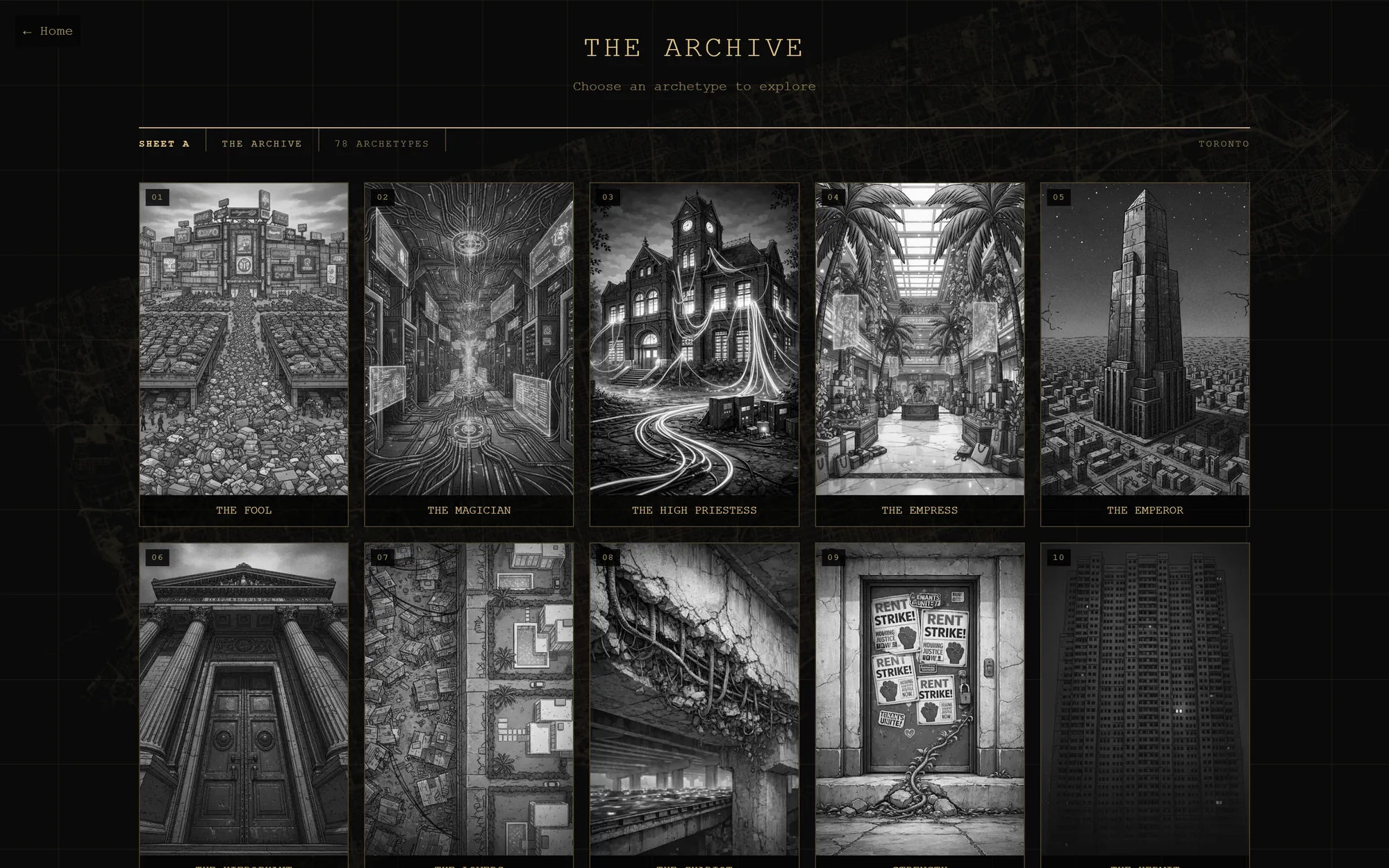
Choose an archetype to explore: the gallery that leads into each reading.